



Maintain to how the engine performs, not to a clock.
Interval schedules overservice healthy engines and miss the ones drifting off baseline. EBM™ measures combustion and tells your shop where the opportunity actually is.
How does emissions-based maintenance diagnose a diesel engine from its exhaust?
Emissions-Based Maintenance measures the chemistry a diesel engine leaves in its exhaust and compares it against the engine's own EPA-certified baseline. When an engine runs as the manufacturer designed, it leaves a distinct emissions profile; when it drifts out of tune, the chemistry shifts. The size of that shift is quantified as recoverable fuel and a specific repair.
The Diagnostic & Repair Flywheel
Every verified repair feeds the next test. The loop keeps turning for as long as the engine runs, so the benefit carries across the entire life of the unit.
A Tech-Enabled Diagnostic and Repair Workflow Platform
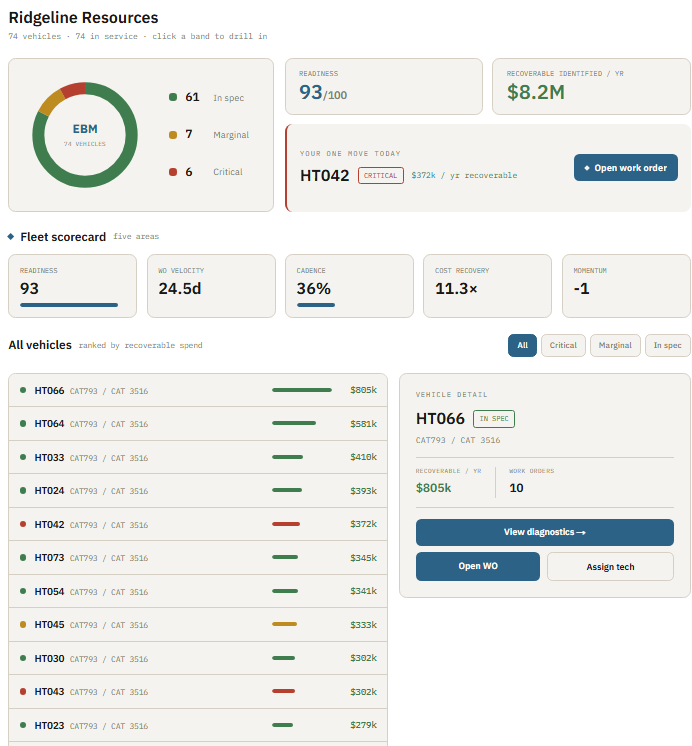
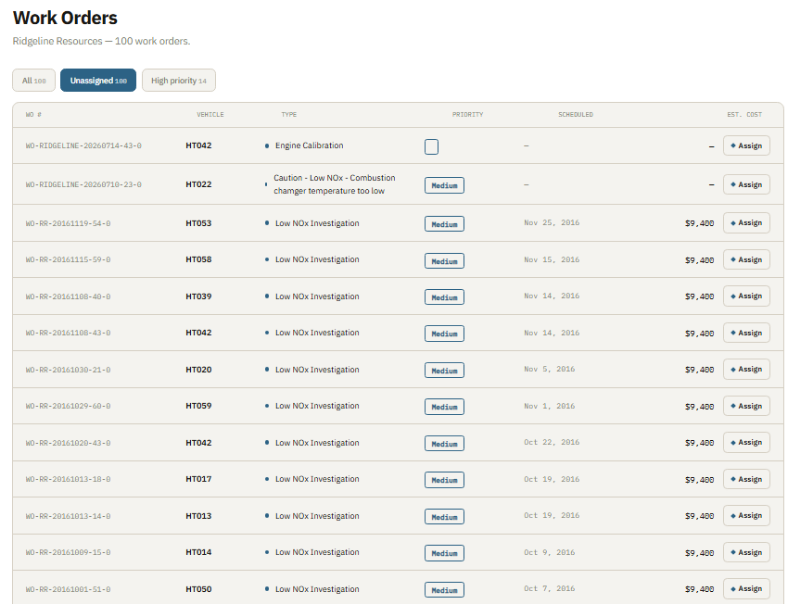
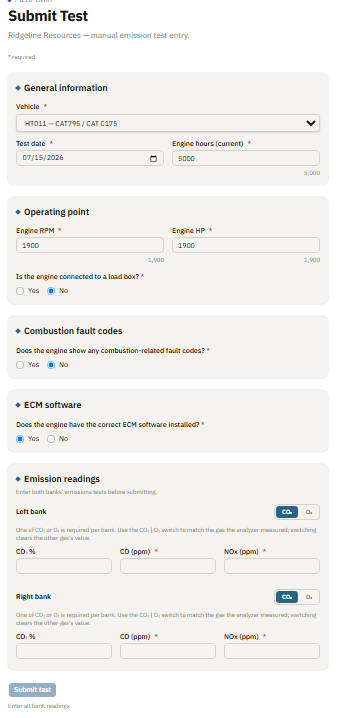
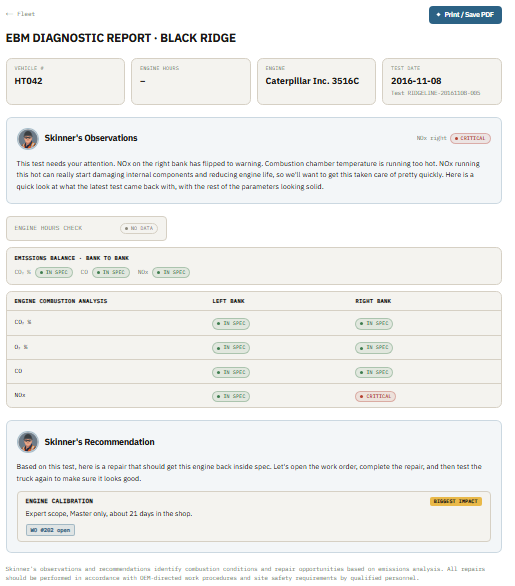
Behind the login is the working software your team uses every day, from the fleet dashboard to the diagnostic report and the work-order flow.
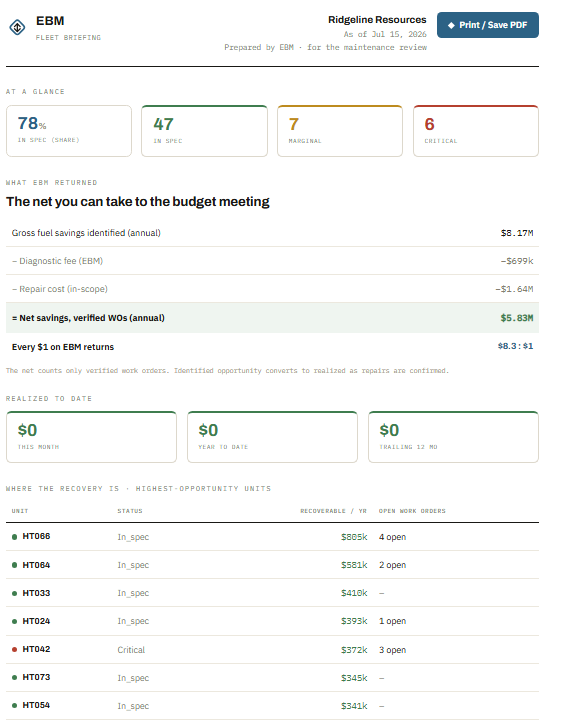
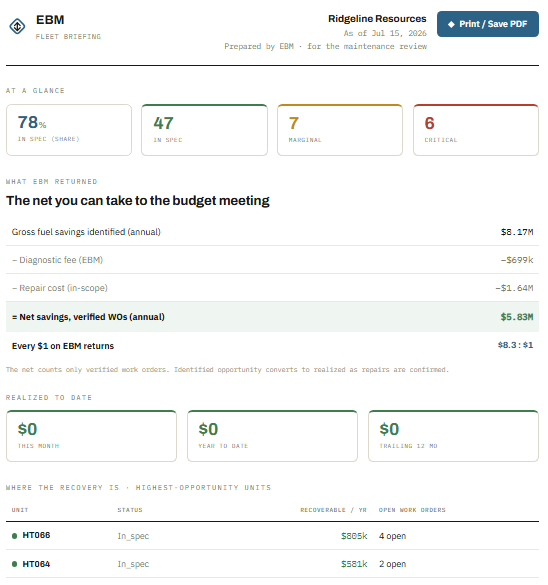
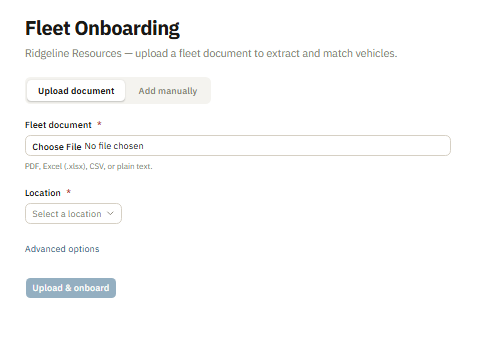
The judgment of one master technician, available to every engine.
Skinner™ does not replace the technician. It scales a way of reading engines that took forty years to earn, and applies it consistently across the whole fleet, with a recovery target held to 5 to 7% of fuel.
How the method works, answered.
When an engine runs as the manufacturer designed, it leaves a distinct emissions profile; when it drifts out of tune, the chemistry shifts. EBM™ measures that chemistry against the engine's own EPA-certified baseline, and the size of the shift is quantified as recoverable fuel and a specific repair.
The diagnostic intelligence inside the platform: AI-powered diagnostics trained by 40+ years of a master diesel technician and a comprehensive diagnostic protocol, built to think like Skinner™ and diagnose more engines than one expert ever could.
An OEM fault code fires only after a problem crosses a threshold the engine controller watches. EBM™ reads combustion chemistry directly, so it catches efficiency drift well before any code triggers, and recommends the correction early.
US and International Patents, granted and filed. White papers, peer-reviewed research filings, and federal and state research program participation. The evidence program behind the method.
starboardresearch.comThe EBM™ platform carries the whole loop: profile, recommendation, work order, verification.
Open the EBM™ platform© 2026 Emissions-Based Maintenance LLC, d/b/a Revealiency. All rights reserved.