


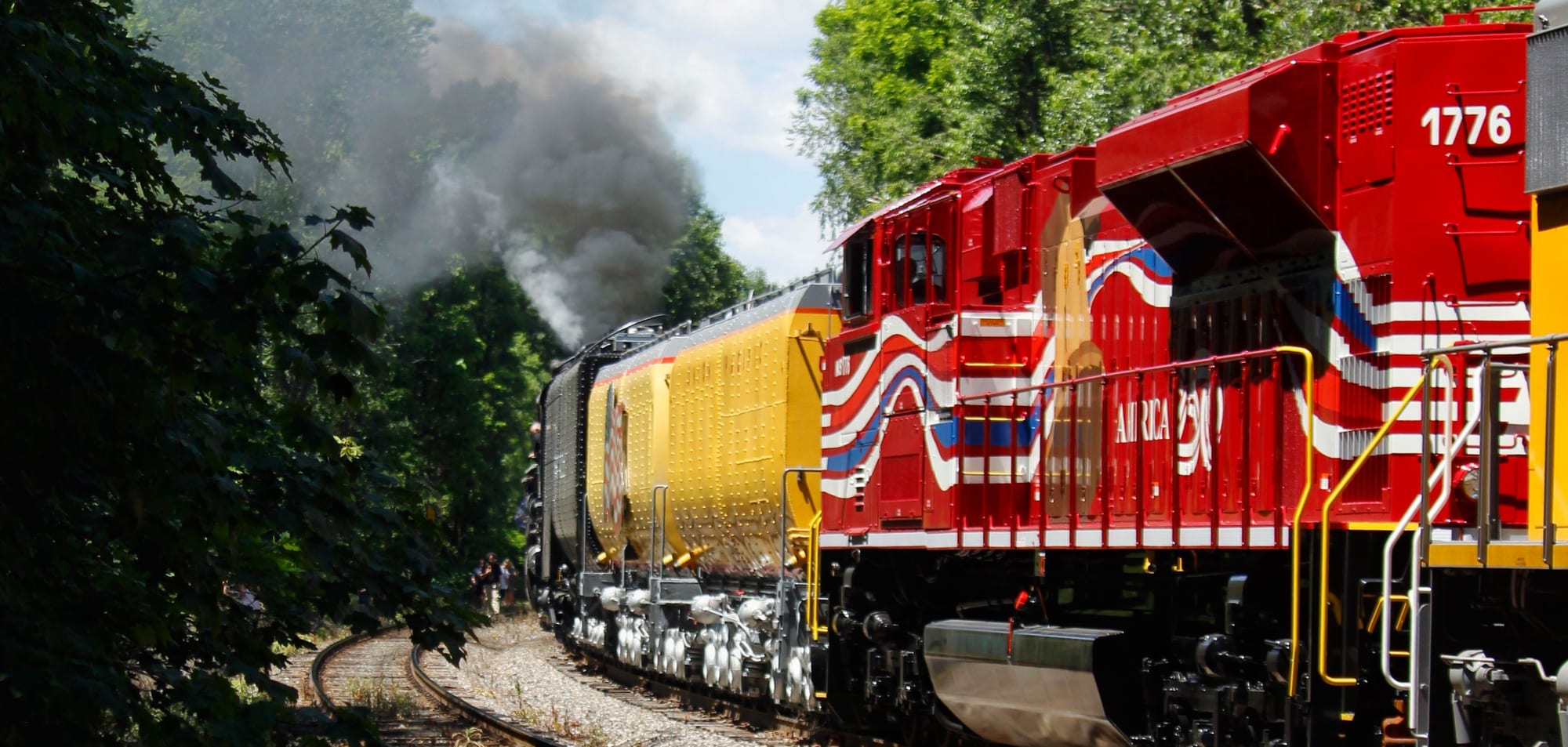
A locomotive burns fuel by the ton. Drift hides in every one of them.
Validated on line-haul locomotive platforms and OEM-agnostic: EBM™ reads each locomotive engine against its certified baseline and turns excess burn into a specific, verifiable repair.
Emissions-based maintenance™ for rail reads exhaust chemistry on diesel locomotives, compares each engine to its certified baseline, and quantifies the deviation in either direction, fuel and carbon burned above the target or power lost below it, as specific, repairable findings, without taking the unit out of service to test it.
Proven on a working railroad.
All case studies
Sixteen locomotives were tested against the engine's own certified combustion target. Fifteen of the sixteen came in below it, averaging 6.55%, with a single unit reading above. Less carbon out means less fuel burned, and less fuel burned means less work done: the same fleet showed an average horsepower loss of 494 against a 3,600 HP specification. The certified baseline came from the operator's own certified test of unit 7 in March 2016. Two independent measurements, one finding, and no fault code anywhere in the fleet.
Deviation runs in both directions. An engine burning more fuel than its target is wasting money; an engine burning less is not making the power it was built to make. Both are findings. Only one of them is visible on a fuel invoice.
Rail operators ask us this.
Yes. The method is validated across five major diesel engine makes, and the published case studies include a passenger rail fleet of 16 locomotives in the western United States.
No. Readings are taken while the engine works. The method compares each engine to its certified baseline and flags the units worth a shop visit, so the shop time goes where the findings are.
A fuel-burn finding is a fuel finding stated in emissions terms, and it reads in both directions. Above the certified target means excess fuel burned and carbon wasted. Below it means less fuel burned and less work done, the signature of an engine not making its rated power. Findings are engine-specific and verifiable on the next test, so either direction is usable evidence for sustainability reporting.
© 2026 Emissions-Based Maintenance LLC, d/b/a Revealiency. All rights reserved.